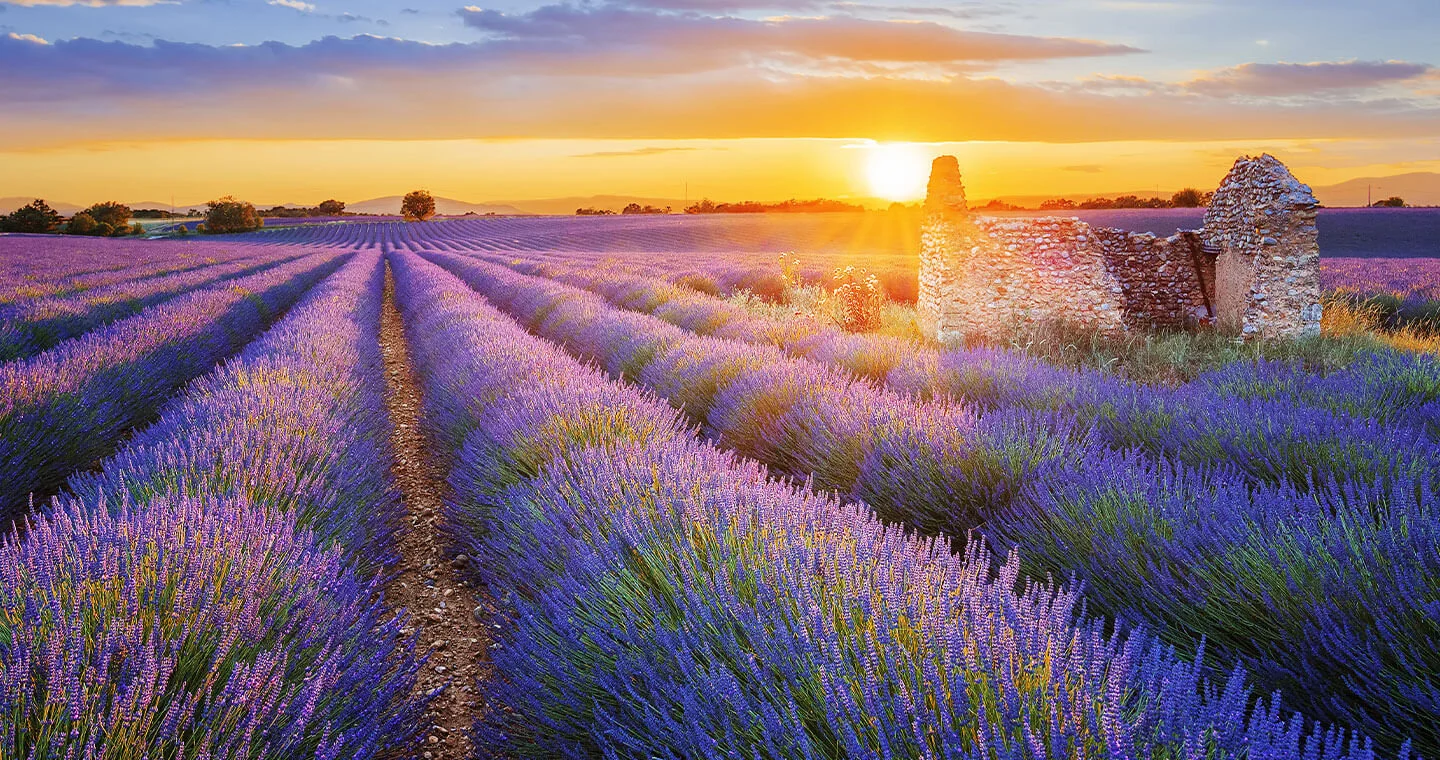
There's something about lavender that just feels like home. Maybe it's the way my grandmother used to tuck dried lavender sachets into our pillowcases, or how that distinctive purple scent seems to instantly melt away the stress of a long day. Whatever the reason, I've spent years diving deep into this remarkable plant—and the more I learn, the more fascinated I become.
Let me take you on a journey through lavender's incredible history, and then I'll share some of my favorite ways to use it in your own home.
A Story Written in Purple: Lavender Through the Ages
When I first started researching lavender, I honestly expected to find a few interesting tidbits. What I discovered was a plant woven into the very fabric of human civilization.
The Egyptians, Greeks, and Romans Knew Something We're Still Learning
Picture this: Egyptian embalmers carefully placing lavender among the wrappings of their pharaohs, believing its preservative properties would help carry the soul to the afterlife. When archaeologists opened Tutankhamun's tomb in 1922, they found traces of lavender still clinging to the air after more than 3,000 years. That's the kind of staying power this plant has.
The Greeks took a different approach. They called it "nardus" and used it in their famous public baths—not just for the scent, but because they genuinely believed it purified both body and spirit. The Romans enthusiastically adopted this practice, and Roman soldiers were known to carry lavender with them to treat battlefield wounds. (Smart move, as we now know lavender has genuine antimicrobial properties.)
Here's a fun fact: the name "lavender" likely comes from the Latin word "lavare," meaning "to wash." So every time you add lavender to your bath routine, you're participating in a tradition that stretches back millennia.
From Medieval Protection to Victorian Obsession
During the Black Death, people would carry lavender pouches, hoping the strong scent would protect them from illness. While they didn't understand bacteria and viruses as we do today, their instinct wasn't entirely wrong—lavender does have antimicrobial properties.
By the Victorian era, lavender had become practically an obsession. Victorian housewives scented everything with it: linens, floors, clothing, even their correspondence. If you've ever wondered why lavender is so closely associated with "cleanliness" and "freshness," you can thank the Victorians.
The Accidental Discovery That Changed Everything
Here's my favorite story about lavender. In 1910, a French chemist named René-Maurice Gattefossé was working in his family's perfume laboratory when he severely burned his hand in an explosion. In his pain and panic, he plunged his hand into the nearest vat of liquid—which happened to be pure lavender essential oil.
He was astonished by what happened next. The burn healed remarkably quickly, with minimal scarring. This experience launched him on a decades-long investigation into the therapeutic properties of essential oils. His 1937 book, "Aromathérapie," essentially founded the modern field of aromatherapy.
I love this story because it reminds me that sometimes the most important discoveries happen by accident—when we're open to paying attention.
Why Lavender Actually Works: The Science Behind the Magic
Now, I'm not one to take things on faith alone. I wanted to understand why lavender works, not just that it does. Here's what the research shows:
The magic lies primarily in two compounds: linalool and linalyl acetate. These compounds interact with our nervous system in fascinating ways—they appear to reduce stress hormones, lower heart rate, and promote the kind of calm alertness that's perfect for winding down at the end of the day.
What I find most compelling is how many of lavender's traditional uses have been validated by modern science:
For Sleep and Relaxation: Multiple studies have shown that lavender aromatherapy improves sleep quality. One study found that people who inhaled lavender before bed reported 20% better sleep quality. As someone who used to struggle with racing thoughts at bedtime, I can personally vouch for this.
For Skin Healing: Remember Gattefossé's burn? Turns out lavender genuinely accelerates wound healing and has antimicrobial properties that help prevent infection. I keep a diluted lavender blend in my first aid kit for minor cuts and burns.
For Tension and Discomfort: The linalool in lavender has anti-inflammatory effects, which is why it's so helpful for tension headaches and muscle soreness after a long day.
My Favorite Lavender Recipes
After years of experimenting, these are the recipes I come back to again and again. They're simple, effective, and use ingredients you can easily find.
Simple Lavender Moisturizer
This is my everyday go-to for dry skin. Just two ingredients, and it takes about 30 seconds to make.
What You'll Need:
- 1 fluid ounce (30 ml) of jojoba oil
- 10-12 drops of lavender essential oil
How to Make It:
Pour the jojoba oil into a small dark glass bottle, add the lavender drops, and give it a good shake. That's it! Apply a small amount to dry patches or as an all-over body moisturizer after your shower. Jojoba is wonderful because it closely mimics your skin's natural oils, so it absorbs beautifully without feeling greasy.
Lavender Lagoon Bath Salts
This is what I reach for after those particularly rough days—you know the ones. The Epsom salts help relax tight muscles while the lavender works its calming magic.
What You'll Need:
- 1 cup Epsom salts
- 1 tablespoon jojoba oil
- 10 drops lavender essential oil
How to Make It:
In a glass bowl, mix the jojoba oil with the lavender essential oil first. Then add the Epsom salts and stir until everything is evenly distributed. Scoop into a warm (not hot) bath and soak for at least 20 minutes. I like to bring a book and a cup of herbal tea—make it an event!
Calming Roll-On for On-the-Go Relief
I keep one of these in my purse at all times. It's become my secret weapon for stressful meetings, long commutes, or anytime I need to find my center again.
What You'll Need:
- 10 ml jojoba oil
- 5 drops lavender essential oil
- 2 drops vetiver essential oil (optional, but it adds a lovely grounding note)
How to Make It:
Add the essential oils to a 10 ml roll-on bottle, then top with jojoba oil. Pop on the roller ball, cap it, and give it a gentle shake. Apply to your wrists, temples, or the back of your neck whenever you need a moment of calm.
A Few Words About Safety and Quality
Lavender is one of the gentlest essential oils out there, but it's still a concentrated plant extract that deserves respect. A few things I've learned:
Always dilute before applying to skin. Even with lavender, undiluted application can cause sensitization over time. I stick to about a 1% dilution for facial products and up to 2% for body products.
When buying lavender oil, look for the Latin name Lavandula angustifolia on the label—that's true lavender, as opposed to lavandin or spike lavender (which have different chemical profiles). A good company should also list the country of origin and offer GC/MS testing reports that verify purity.
Closing Thoughts
From ancient Egyptian tombs to modern research laboratories, from Roman soldiers' first aid kits to your grandmother's linen closet, lavender has been helping humans find moments of peace and healing for thousands of years.
There's something deeply comforting about connecting with that history every time we open a bottle of lavender oil. We're not just using a product—we're participating in an unbroken tradition of human beings turning to the natural world for support, comfort, and healing.
That, to me, is what botanical wellness is all about.